
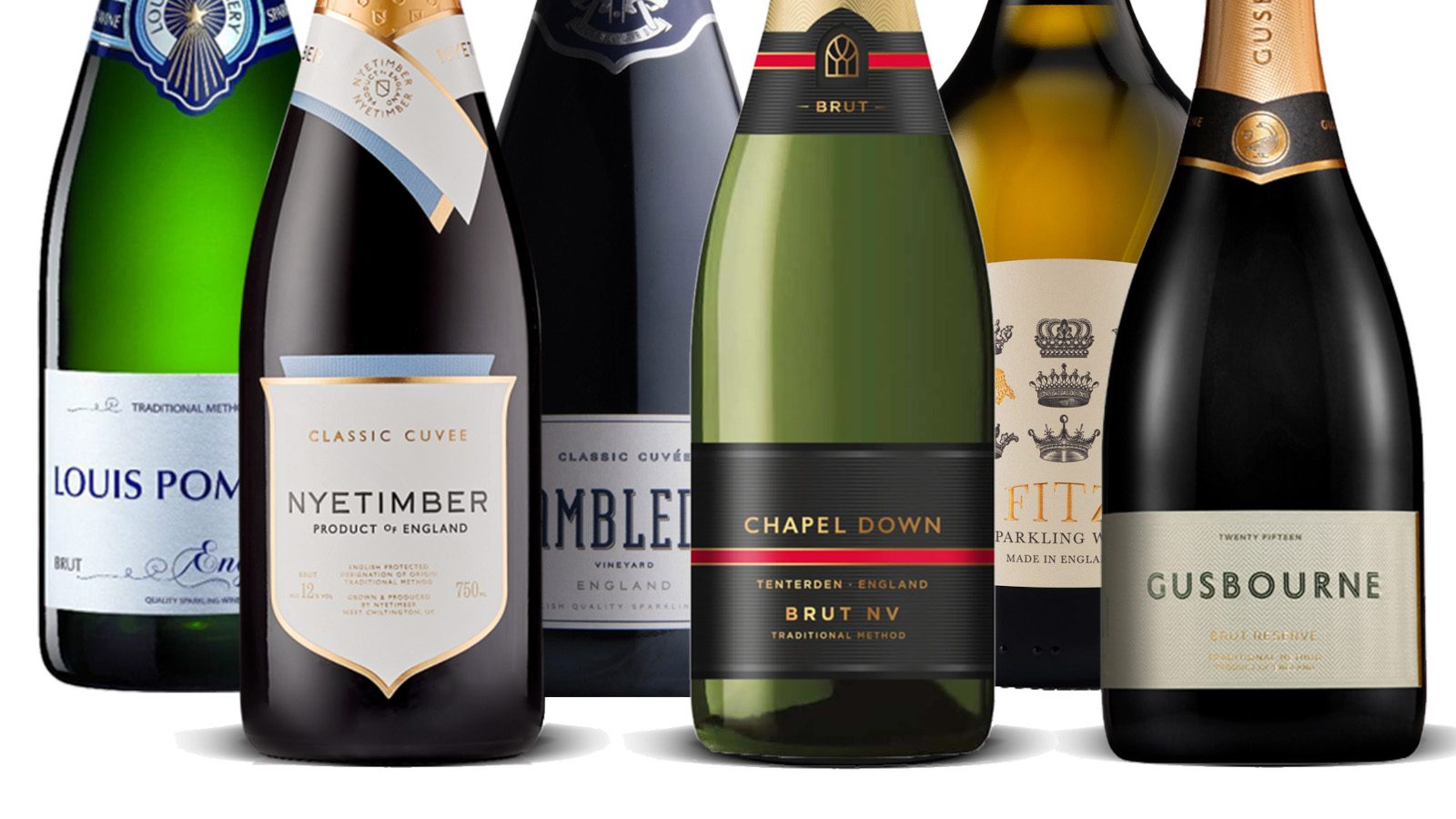
Better than Champagne? A Guide To English Sparkling Wines
Same chalk, same grapes, same method as Champagne — just a few hundred miles north, and only ripening properly since the climate warmed up.
For most of wine history, "English wine" was a punchline — a joke about a country too cold and too grey to grow anything worth drinking. Then someone actually looked at the ground it was standing on.
The soil was always right; the weather wasn't
The North Downs running through Kent and Sussex sit on the same band of chalk that runs under Champagne's Côte des Blancs — geologically, it's the same seam, just interrupted by the English Channel in between. That chalk drains well, reflects heat back up at the vines, and gives sparkling wine grapes the mineral backbone they need. Growers and geologists have known this for decades. What was missing wasn't the soil. It was enough reliable sunshine and warmth across a growing season to actually ripen grapes properly, and that's only really arrived in the last twenty to thirty years, as the climate has warmed.
Same grapes, same method, different postcode
English sparkling wine isn't a local invention with its own rulebook — the serious producers use exactly the same three grapes as Champagne, Chardonnay, Pinot Noir, and Pinot Meunier, made the same way: second fermentation inside the very bottle you'll open, sealed in, aged on its own spent yeast for real length of time before release. It's not "England's answer to Champagne" in the sense of doing its own thing — it's the same technique, applied to a very similar strip of chalk, several hundred miles further north.
The upset that got people's attention
In 2017, a headline-making blind tasting dubbed "The Judgment of Bath" (an echo of the famous 1976 "Judgment of Paris," where Californian wines beat top Bordeaux and Burgundy blind) pitted English sparkling wine directly against grande marque Champagne. English bottles scored well enough to make wine writers sit up — not a one-off fluke either, since English sparkling has kept turning up on winners' lists at international blind competitions in the years since. Key regions to look for: Kent, Sussex, and increasingly Hampshire, all sitting on that same chalk seam.
Why the price gap hasn't closed
Quality parity in a blind glass doesn't automatically translate into market position — Champagne has three centuries of brand-building, marketing spend, and cultural cachet that England's industry, barely a few decades into taking itself seriously, simply hasn't had time to accumulate. A bottle of top English sparkling can now genuinely compete with Champagne on what's actually in the glass. It can't yet compete with what "Champagne" means to say out loud at a wedding. That gap is reputation, not quality — which, if you're buying on flavour rather than name-dropping potential, is very good news for your wallet.