
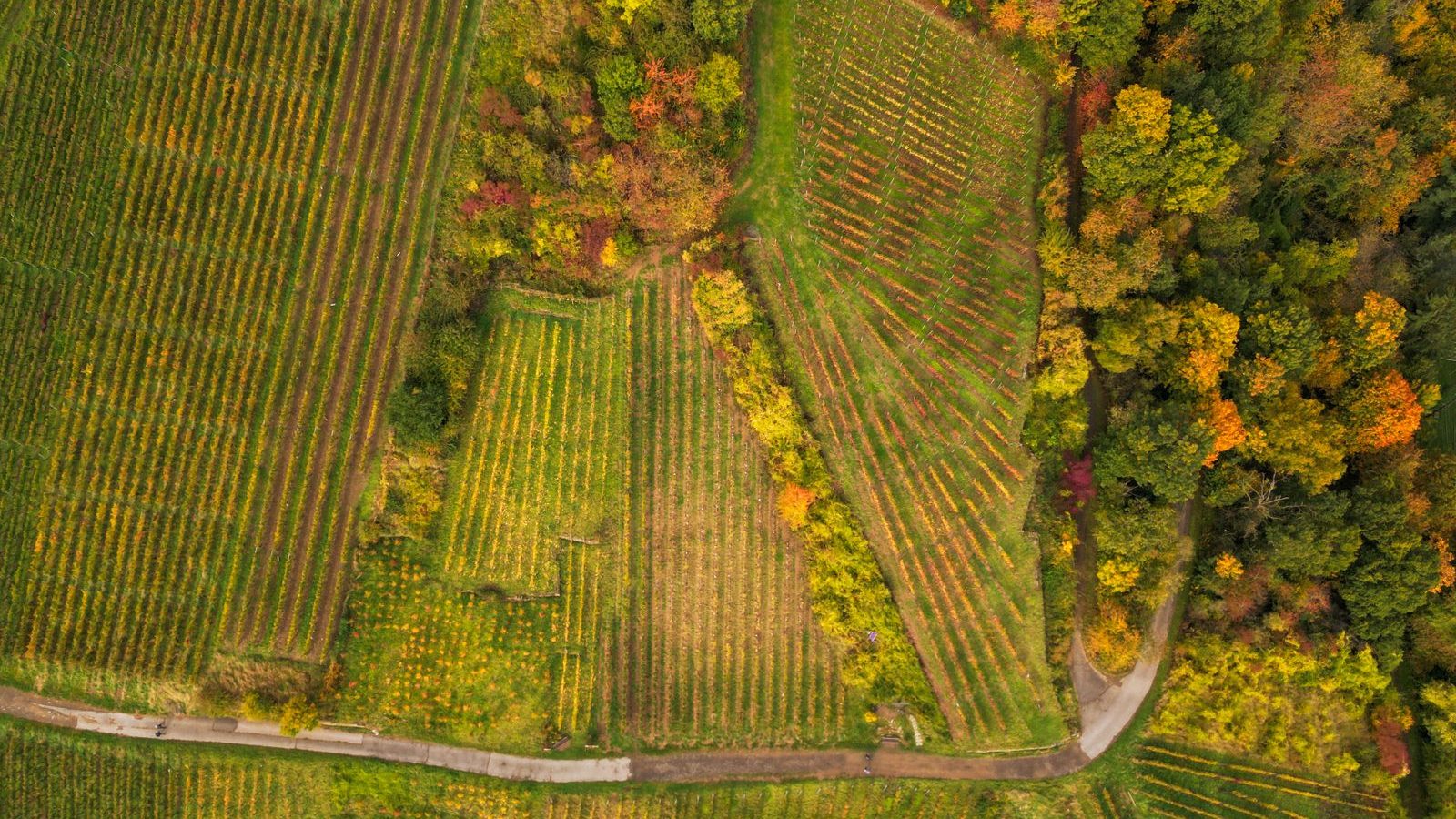
How Climate Affects Wine
Same grape, same winemaker, wildly different wine — just move the vineyard a few thousand miles and change the weather.
Same grape, same winemaker's skill level, wildly different wine — just move the vineyard a few thousand miles closer to or further from the equator. Climate isn't background scenery in wine. It's most of the recipe.
What heat and cold actually do to a grape
Grapes ripen by converting acid into sugar as the season goes on — more sun and heat means more sugar (which becomes more alcohol during fermentation) and less acidity left by harvest. Tannin ripeness follows a similar curve: in a cooler year or region, tannins can stay green and harsh even once the sugar looks ready, forcing growers to choose between picking early for freshness or late for riper tannin at the cost of a flabbier, less acidic wine. Warmth also pushes flavour development toward riper, darker, jammier fruit character; cold pushes it toward brighter, tarter, more citrus-and-red-fruit territory.
The same grape, two very different answers
Pinot Noir grown in cool Burgundy comes out pale, tart, red-fruited, and structured around acidity rather than power. The same grape grown in warmer pockets of California turns darker, riper, more jammy, with softer acid and more obvious alcohol — genuinely different wine, same vine. Chardonnay tells the same story from the white side: lean and flinty in Chablis's marginal climate, riper and more tropical in Napa Valley's reliable warmth. Neither version is the "correct" one — they're answers to two different questions the climate was asking the grape.
Why some years get hyped and others don't
Vintage variation — the fuss made over "a great year" for a given region — is mostly this same mechanism playing out season to season in a single place. A cooler, wetter year in Bordeaux might mean underripe tannin and thinner wine; a long, warm, dry one might hit the sweet spot of ripe fruit with acid still intact. It's the same vineyard, same grapes, same winemaker — the weather that year did most of the actual work, for better or worse.
The reshuffle already underway
A warming climate is quietly redrawing the map. Regions that were once too cold to reliably ripen grapes at all are becoming viable — most visibly England, whose chalk soils were always suited to sparkling wine but whose climate, until fairly recently, mostly wasn't. Meanwhile some traditionally warm regions are having to adapt to conditions now closer to what used to define somewhere cooler. The grape hasn't changed. The weather asking it questions has.