
Mosel River: Steep Slopes, Riesling and Sundials
Vines clinging to slate cliffs too steep for machinery, a grape that runs from bone-dry to lusciously sweet, and one of Europe's most underrated, most affordable serious wine regions.
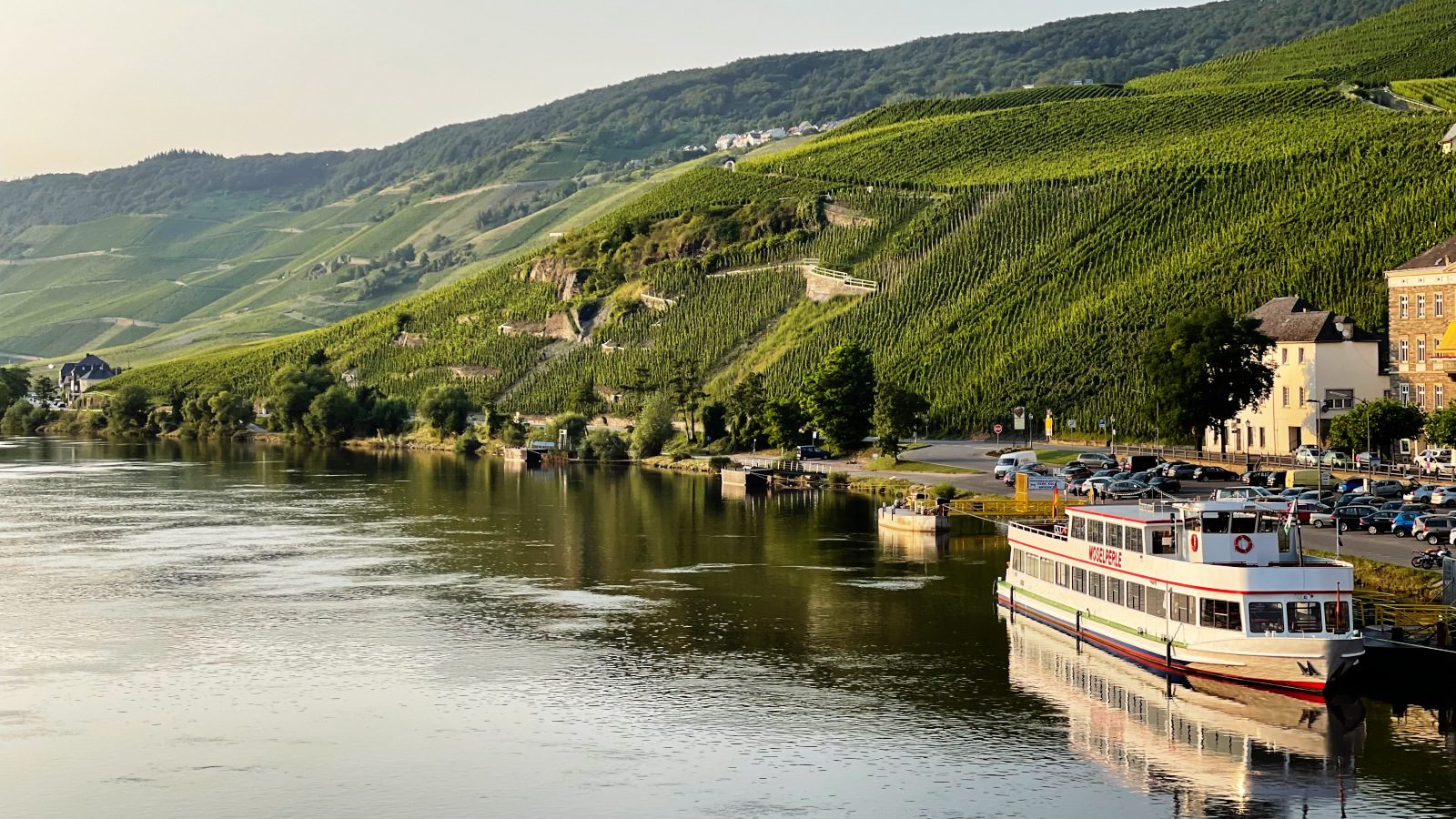
Ask people to picture the world's most beautiful wine region and you'll get Tuscany, or the Douro, or Champagne on a misty morning. Almost nobody says Germany. Which is a genuine oversight, because the Mosel — a river valley of impossibly steep, slate-covered slopes lined with vines that look one bad step away from sliding into the water — is as dramatic as wine scenery gets, and it's still one of the more affordable serious wine regions in Europe.
Slopes too steep to farm any normal way
Mosel vineyards regularly sit at gradients of 60-70%, among the steepest anywhere in the world, which is precisely why most of the region still has to be hand-tended or worked with specialist single-wheel tractors rather than anything resembling normal machinery. That labour-intensive difficulty is also part of the deal: the dark slate soil the vines are rooted in drains fast and absorbs heat during the day, radiating it back at night to help ripen Riesling grapes this far north, in a climate that would otherwise be marginal at best.
Reading the sun with stone dials
Vineyard owners in the 19th century took ripening seriously enough to build actual sundials into the best south-facing slopes, to track exactly how much sun each row of vines was catching through the day. The most famous survivor, Wehlener Sonnenuhr in the village of Wehlen, still gives its name to one of the Mosel's most sought-after vineyard sites — a rare case of a piece of measuring equipment becoming a permanent, prestigious part of the label.
One grape, an enormous range
What makes the Mosel worth genuinely exploring, rather than just admiring from a boat, is how much range a single grape can cover here. Riesling shows up bone-dry and searingly acidic, gently off-dry with just enough sugar to soften that acid, lusciously sweet in the region's Auslese and Eiswein tiers, and — in wines given real bottle age — develops a distinctive petrol-like aroma that sounds like a fault and isn't; it's a genuine, sought-after marker of a Riesling that's been allowed to mature properly. Aged Riesling isn't for everyone. For the people who do get on with it, there's not much else in wine quite like it.
If you actually go
A boat trip down the river is the easiest way to see just how absurd the terracing looks from below. In Bernkastel-Kues, the old cooperative wine cellar runs an all-you-can-taste session for around €20 covering dozens of local producers — worth clearing space in the boot of the car for, because you will want to bring several bottles home. Pair whatever you're drinking with the region's own hearty, unfussy German cooking, and you've got one of Europe's most underrated long weekends.