
Sherry: The Wine That Ages Itself
Everyone's nan had a bottle of the bad stuff. The actual production method — barrels that never fully empty, and a living yeast raft that decides how it turns out — deserves a lot more credit.
I once brought a bottle of fino to a dinner party and got the exact reaction you'd expect: a polite pause, then someone asking if we had "anything else." Sherry has an image problem so severe that most people's only reference point is a dusty bottle of cream sherry their gran kept behind the good glasses. Which is a shame, because the actual production method is one of the strangest and cleverest things happening anywhere in wine.
No bottle is one vintage
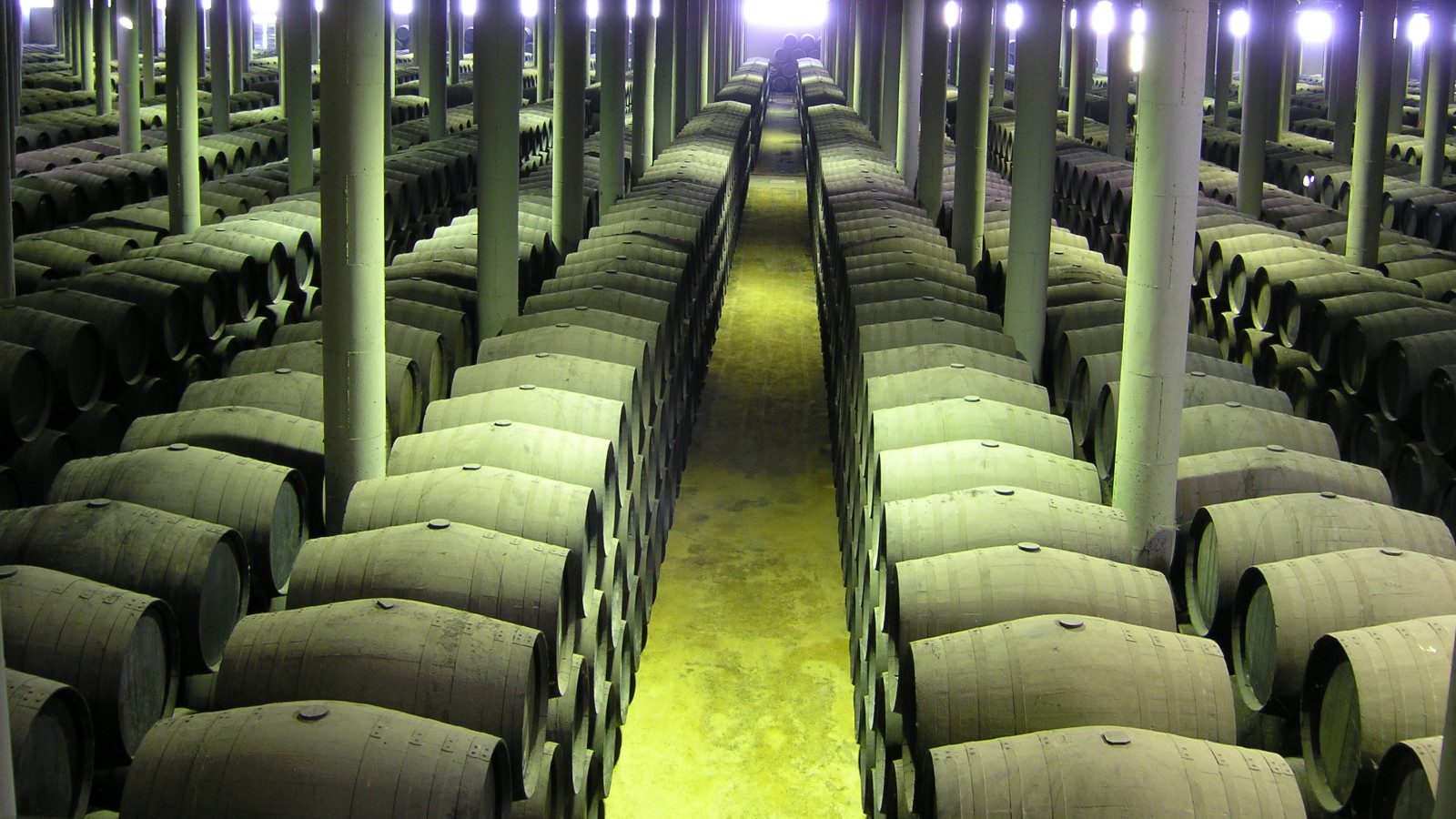
Most wine is bottled from a single year's harvest. Sherry, made in and around Jerez in southern Spain, mostly isn't. It's built on something called the solera system — rows of barrels stacked by age, where wine drawn off for bottling comes from the oldest row, and that row gets topped up from the next-oldest, which gets topped up from the one before that, all the way back to the newest wine at the top. Nothing is ever fully emptied. A bottle of sherry off the shelf is a blend of years, sometimes decades, constantly refreshed and never entirely new or entirely old. There's no vintage to look for because there isn't one.
The mould that makes the wine
Here's the part that sounds made up: some sherries develop a living layer of yeast on top of the wine while it's sitting in barrel, called flor. It forms a pale, spongy raft across the surface and does two things — it feeds on the wine's glycerol and alcohol, and it physically blocks the wine from contact with air. The result, once bottled, is fino or manzanilla: bone dry, tangy, and noticeably lighter than you'd expect from something aged for years in a barrel that isn't sealed airtight.
Take the flor away — or fortify the wine to an alcohol level flor can't survive — and you get the opposite outcome on purpose. Without that protective layer, the wine oxidises steadily instead, turning darker, nuttier, and richer. That's oloroso. Same starting wine, same region, same barrels; one gets a bodyguard, one doesn't, and you end up with two wines that barely taste related.
Why it got written off anyway
None of that complexity is what did the damage to sherry's reputation. What did the damage was decades of cheap, heavily sweetened "cream sherry" flooding supermarket shelves in the mid-20th century, sold as an old-fashioned tipple rather than a serious wine. It's the same fate that hit box wine — a genuinely sound method dragged down by its worst commercial examples, until the good stuff stopped getting a fair hearing.
A properly dry, well-made fino, served chilled, is one of the most food-friendly — sorry, one of the actual best wines for pairing with salty, briny food — that Spain makes. Nobody at that dinner party believed me either.