
What Are Grower Champagnes?
The two-letter code buried in a Champagne label's small print tells you more than almost anything else on the bottle.
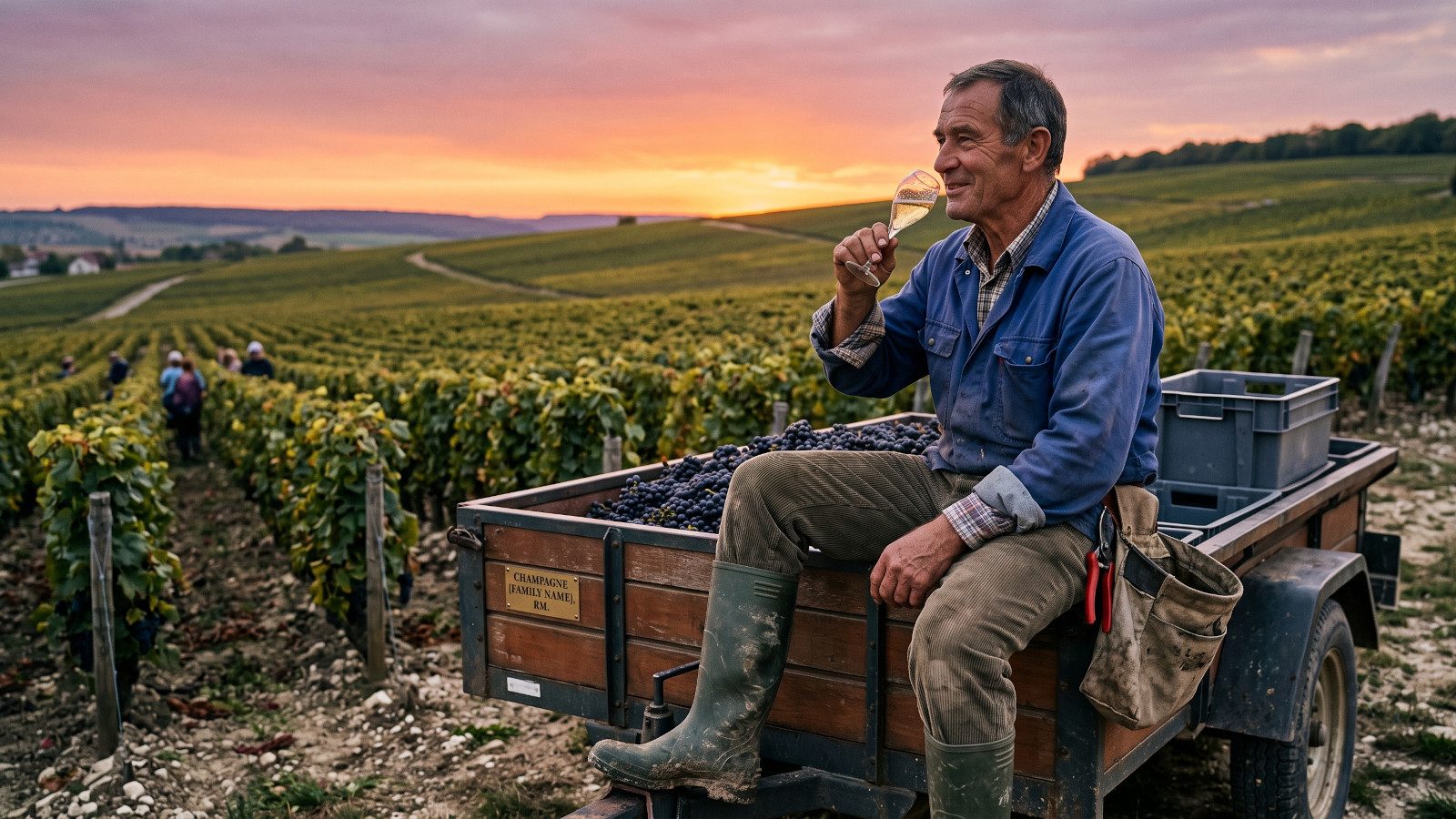
Thousands of small family vineyard owners in Champagne spent generations as the quiet, unglamorous supporting cast — growing the grapes, then selling them off to the big houses whose names are on every bottle you've actually heard of. The houses got the brand, the marketing budget, and the recognition. The growers got a cheque. Some of them eventually decided that arrangement wasn't good enough, and started bottling their own instead.
Two letters that tell you everything
Buried in tiny print on every French Champagne label is a two-letter producer code, and it's the single most useful thing on the bottle if you know what it means. NM (Négociant-Manipulant) means a house that buys in grapes, or finished wine, from growers and blends it into a consistent house style — this is most of the famous names you already know. RM (Récoltant-Manipulant) means a grower who farms their own vineyards and makes and bottles the wine themselves, rather than selling the fruit on. Same region, same method, completely different business model behind the label.
Why the character is genuinely different
A big house's whole skill is consistency — blending grapes from many growers and many villages, sometimes many vintages, to make sure this year's bottle tastes reassuringly like last year's. A grower working their own small plot has no such blending safety net and, often, no interest in one: the wine reflects one specific patch of vineyard, one house's winemaking instincts, and considerably more year-to-year variation as a result. Grower Champagne tends to taste more like a specific place, less like a consistent brand — the trade-off is exactly what you'd expect from swapping consistency for individuality.
Where the value actually sits
A grower Champagne skips most of the marketing spend, brand-building, and reputation premium baked into a big house's price, because there's no global advertising budget behind an RM producer farming a few hectares — the price is closer to reflecting what's actually in the bottle. That doesn't automatically make it better than a great house wine; it makes it a different kind of bet, often a better-value one, on a winemaker's individual judgement rather than a brand's track record.
The same story, playing out somewhere else
This is almost exactly the tension that drove several of Cava's top producers to break away and found Corpinnat in 2019 — growers who felt the big-picture regional rules had stopped representing what they were actually trying to make, and went their own way instead. Different region, same underlying fight: individual site and individual winemaker, against consistent brand at scale.