
Bakhmut: The Sparkling Wine Cellar That Survived A City's Destruction
A 19th-century mine, millions of bottles, and a rescue carried out in stages while the city above it was fought over street by street.
Seventy metres beneath a city being shelled into rubble, workers spent months quietly loading crates of sparkling wine onto trucks, a few thousand bottles at a time, and driving them out under the protection of the soldiers defending what was left of their home. This is not a metaphor for resilience. It happened, in Bakhmut, in eastern Ukraine, between 2022 and 2023, and it is one of the more remarkable rescue stories to come out of a war that has produced very few good ones.
A mine, then a winery, then a city built around both
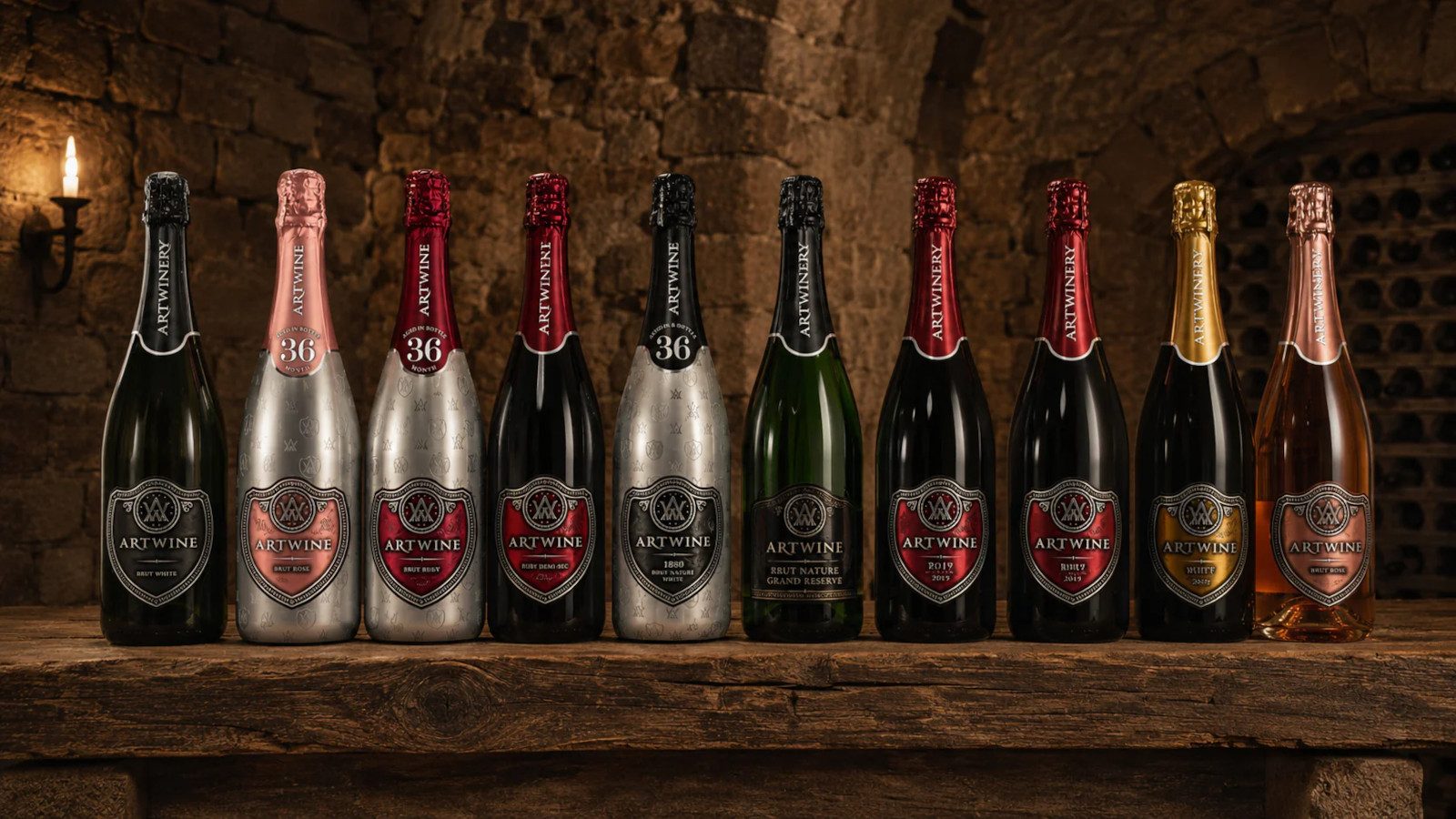
The tunnels themselves predate the wine by seventy years. They were dug out from 1880 onward as a gypsum mine, and by the time anyone thought to put wine in them they already formed a vast underground network, kept at a near-constant cool temperature ideal for ageing anything slowly. The winery came later, and for a distinctly Cold War reason: in the early 1950s, with Soviet access to French Champagne cut off, the state decided to build its own bottle-fermented sparkling wine industry from scratch, and chose these disused galleries beneath the town then known as Artemivsk to age it in. After Ukrainian independence in 1991, the winery — by then called Artwinery — began selling under its own brands rather than a state label: Artemivske, named for the city's old Soviet-era name, and Krim.
Two distinctive wines, made the proper way
Both wines were made using the traditional method — the same secondary fermentation in the bottle that Champagne uses, rather than the faster, cheaper tank method most sparkling wine relies on. Krim Brut Blanc, a dry white blend of Chardonnay, Aligoté, Riesling, and Pinot, is the more internationally recognisable of the two. Artemivske itself is stranger and more distinctly Ukrainian: a semi-sweet sparkling red, made from Cabernet Sauvignon, Merlot, and Saperavi, aged on its lees for the better part of a year. Sweet sparkling red is a hard sell in most wine markets. In Ukraine, it became the country's best-selling sparkling wine, a fixture at family celebrations for generations, long before anyone had reason to think of it as anything more than that.
The battle
Russia's full-scale invasion began in February 2022. By August that year, Bakhmut had become the focus of what would turn into the longest and among the bloodiest battles of the entire war — nearly ten months of fighting, fought largely by Wagner Group mercenaries against Ukrainian forces defending the city street by street, with tens of thousands of casualties on both sides before it was over. The city above ground was reduced to ruins almost entirely. The mine beneath it, by comparison, was one of the few structures in Bakhmut solid enough to survive the bombardment intact.
The rescue
As the fighting closed in through late 2022 and early 2023, Artwinery's staff made the decision to save what they could. Working in stages, under the protection of Ukrainian forces still holding parts of the city, they moved roughly 300,000 bottles out of the mine and out of Bakhmut before it fell — smuggled out gradually rather than in one dramatic convoy, because a single large evacuation would have been both logistically impossible and a target. Some of what was saved stayed in Ukraine, sold domestically to support the country's own wine trade through the war. Some went abroad: a shipment to Japan reportedly sold out quickly, and an American importer brought in close to 20,000 bottles, some of which have since been auctioned for charity in aid of Ukraine, a single rare bottle once fetching several thousand dollars at auction.
By late May 2023, Bakhmut had fallen to Russian forces. The winery's above-ground buildings were destroyed in the fighting. What remains of the mine itself, and whatever bottles were still inside it, is no longer accessible to the company that built it.
What's left, and how to help
No new wine will be made this way again in that mine, under that company, in that city. What survived is what survived: a finite, dwindling stock, with reports putting the amount currently available outside Ukraine somewhere in the tens of thousands of bottles, a number that only gets smaller. Artwine sells the rescued bottles internationally, with proceeds going directly to support Artwinery, its workers, and other Ukrainian wine-industry businesses affected by the war, and a share of every sale directed to Rebuilding Cellars, a nonprofit supporting Ukrainian winemakers. Buying a bottle isn't a grand gesture. It's a genuinely direct, practical one — putting money behind the people who chose, while their city was being destroyed around them, to save what they'd spent decades building rather than let it disappear along with everything else.