
Ice Wine, Explained: Wine Made From Frozen Grapes
No fungus, no waiting for extra ripeness — just grapes left on the vine until winter freezes the water clean out of them.
Every other sweet wine on this site so far has come from concentrating a grape by removing water some other way — a fungus dehydrating it on the vine, or simply picking late enough that sugar has piled up naturally. Ice wine skips the fungus and the patience-based approach entirely and just waits for the grapes to freeze solid.
The process
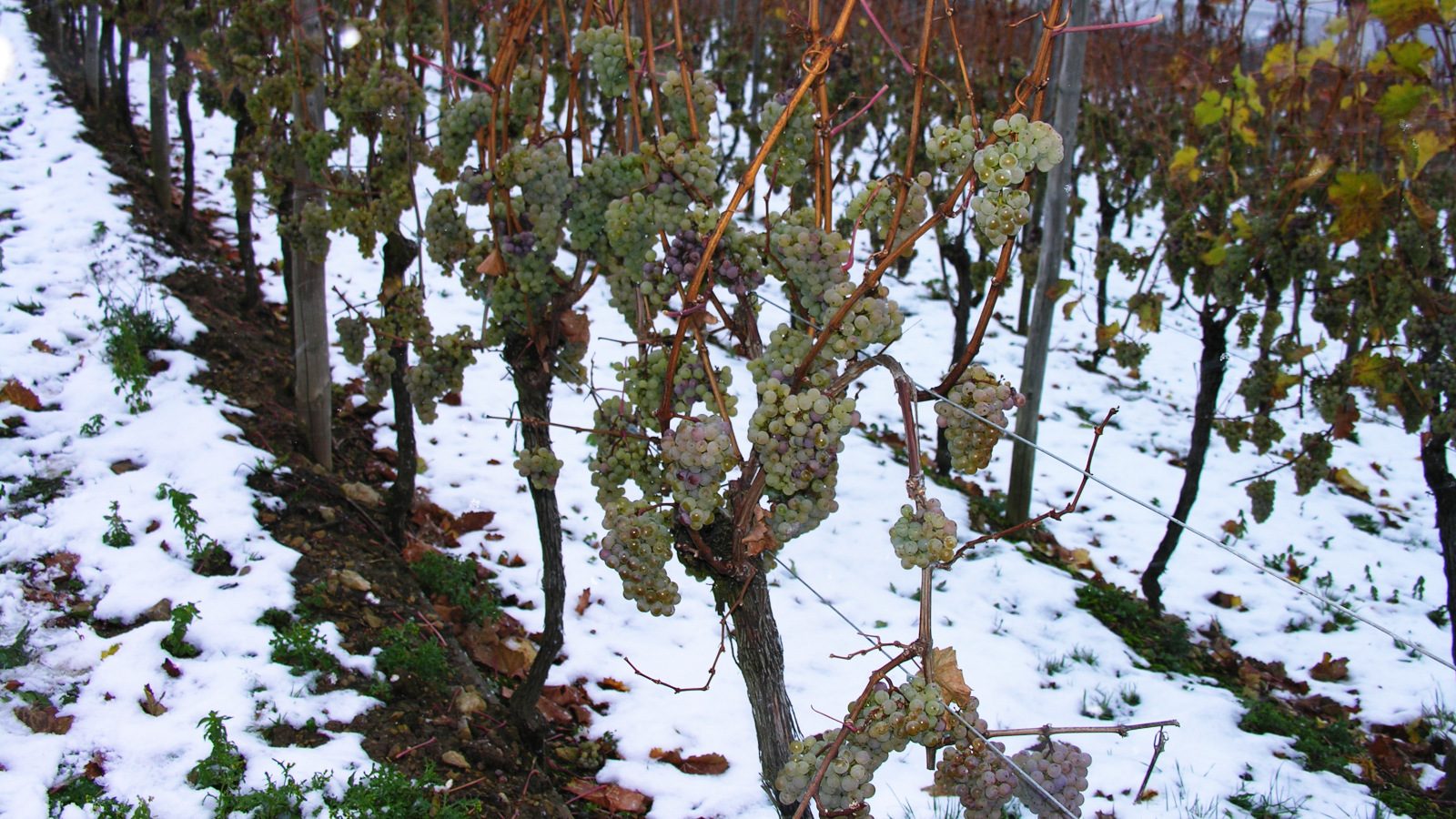
Grapes destined for ice wine are deliberately left hanging on the vine long after every other variety has been picked, sometimes well into December or January, until a hard enough frost hits. Once frozen, they're picked and pressed while still solid — and because water freezes before the sugar-dense juice inside the grape does, only a small, intensely concentrated trickle of syrupy, unfrozen liquid comes out under the press, with the ice itself left behind. Germany's Eiswein rules require grapes to freeze at -7°C or below before pressing; Canadian regulations set the bar slightly colder, at -8°C. Either way, there's no faking it in a warm cellar — the grapes have to actually freeze on the vine, outdoors, for the wine to legally carry the name.
The gamble
Every week those grapes stay on the vine waiting for a hard freeze is a week they're exposed to birds, rot, and a wet autumn that can ruin the crop before winter even shows up. Growers can lose an entire year's fruit to a mild winter that simply never gets cold enough in time, with nothing to fall back on once that happens — there's no partial version of ice wine to salvage from grapes that never froze properly.
Why it's expensive, and where it's made well
Frozen grapes give up very little liquid under the press, so a whole vine's worth of fruit yields a tiny fraction of what the same vine would produce as ordinary wine — small volumes, high risk, and real hand-labour in freezing conditions all show up directly in the price. It's made seriously in relatively few places for the obvious reason that you need reliably hard, on-schedule winter frosts to do it at all: Canada, particularly around Niagara Peninsula, and Germany, across regions like Mosel, lead the category precisely because their winters can be trusted to actually deliver the cold.