
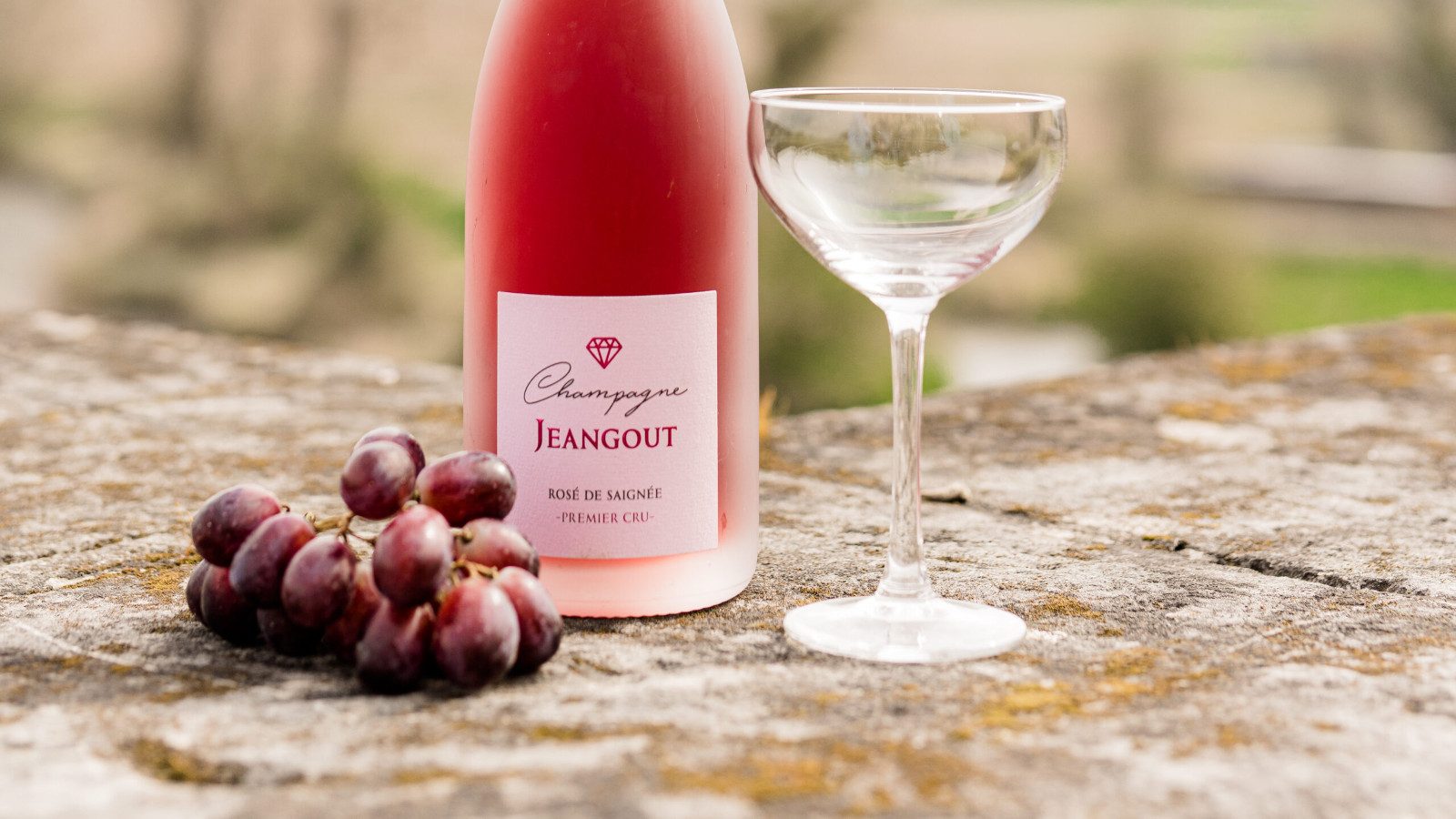
The Best-Kept Secret Of Champagne: Rosé De Saignée
Most rosé Champagne gets its colour stirred in from a splash of still red wine. The rarer, harder version actually earns it the traditional way.
Almost every rosé Champagne on a supermarket shelf got its colour the easy way: a splash of still red Coteaux Champenois wine stirred into an otherwise white base before the second fermentation, as already covered in the full Champagne guide. It works, it's legal, and it's predictable. It's also not how the more serious, more traditional version is made — and almost nobody puts that version on the label in big letters, because it's a genuine pain to get right.
The traditional method: saignée
Rosé de saignée — "bleeding," the same technique behind some still rosé — starts the same way a red wine does: black grapes, usually Pinot Noir or Pinot Meunier, are crushed and left in contact with their skins, so colour and structure start extracting into the juice. Before that juice would normally turn into a full red wine, a portion of it is drawn off — "bled" — while it's still pink, and that bled-off juice becomes the base for the rosé Champagne, fermented and aged the same way as any other Champagne base wine from there.
Why it tastes different
Because saignée rosé actually spent time in contact with grape skins rather than having colour stirred in afterwards, it typically shows more structure, deeper colour, and more genuine red-fruit character — closer to a proper wine's worth of tannin and texture than the blended version, which is built more for consistency than intensity. It tastes less like a white wine with a tint added and more like an actual, if pale, red wine with bubbles.
Why it's rarer
Saignée is genuinely harder to control. The amount of colour and flavour extracted depends on skin contact time, temperature, and the specific batch of grapes that year, none of which behave with the predictability a blend of two already-finished wines gives you. A house can taste and adjust a red-wine-plus-white-wine blend until it matches exactly what they made last year; a saignée batch is more of a bet, decided in real time during the harvest, on skins that won't behave the same way twice. For a wine business built on consistent house style, that unpredictability is a genuine cost, not just a romantic inconvenience.
The best-kept secret part
Most rosé Champagne bought on instinct is the blended, reliable version, and there's nothing wrong with it. But when a producer does put out a saignée rosé, it's usually because they wanted to make a genuine style statement rather than just tint a white wine pink — and it rarely gets marketed as loudly as the difference actually deserves. Worth asking specifically for it next time, rather than assuming all pink Champagne is doing the same job.