
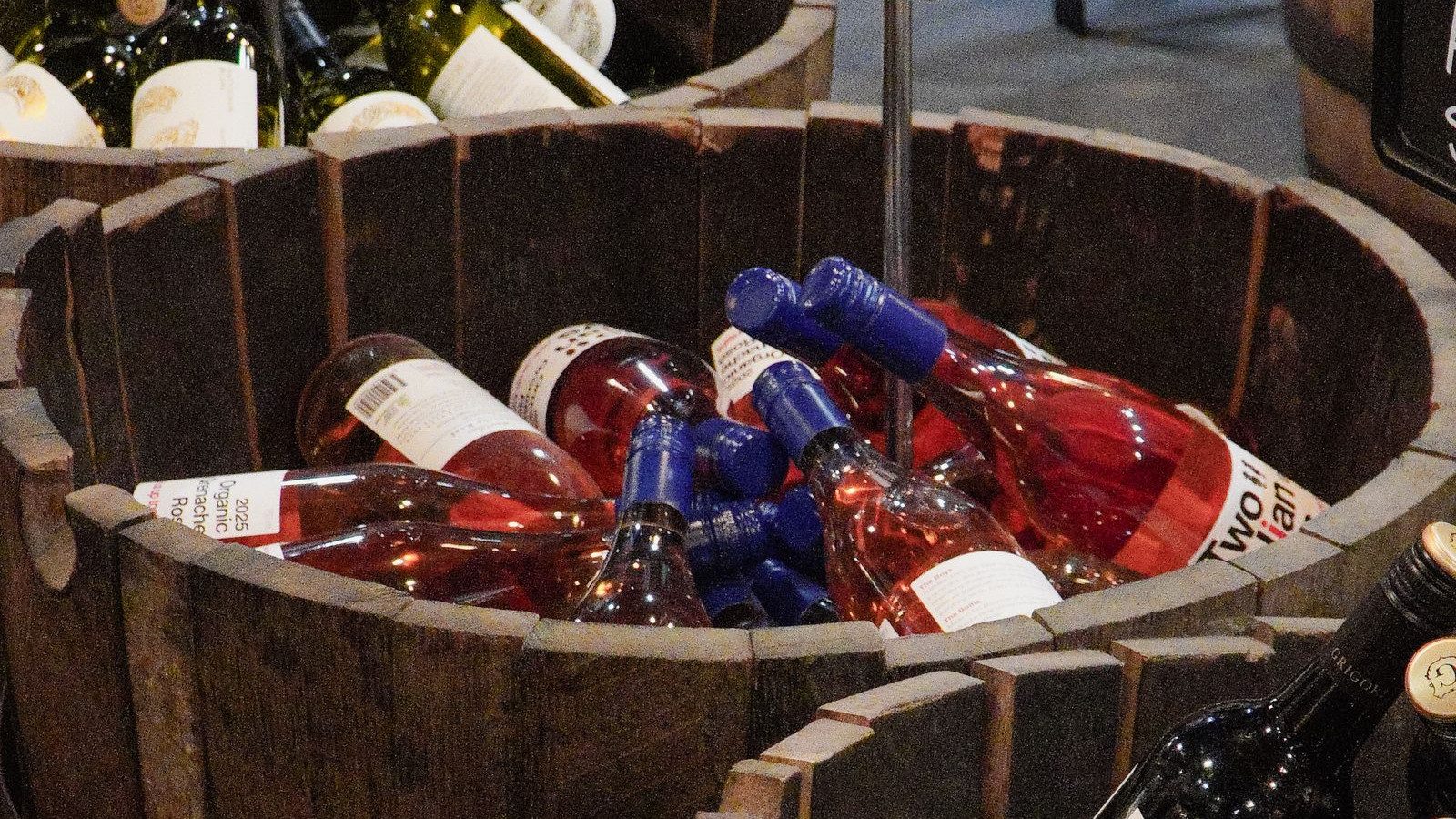
How Is Rosé Actually Made?
Not red and white blended together — that's banned almost everywhere it matters. The real methods say a lot more about the wine in the glass.
Ask around and someone will confidently tell you rosé is just red wine and white wine mixed together. Convenient theory, wrong theory — and in most of the wine world, it's not even legal to make it that way.
The one legal exception proves the rule
Blending finished red and white wine to make pink wine is explicitly banned across most of the EU's wine regulations. There's exactly one famous, deliberate exception: Champagne, where blending a small amount of still red wine into the base wine before the second fermentation is a standard, legal way to make rosé Champagne. Everywhere else, rosé gets its colour a completely different way — from contact with red grape skins, not from a mixing jug.
How it's actually made
Direct press is the palest method: red grapes are pressed almost immediately, so the juice barely touches the skins before it's drawn off, picking up only the faintest tint. This is the classic Provence approach, and it's exactly why Provence rosé is famous for looking more like onion skin than pink lemonade.
Skin contact (maceration) goes a step further: crushed red grapes sit with their skins in the juice for anywhere from a few hours to a day or two before pressing, giving noticeably more colour and a bit more texture without extracting the full tannin a red wine would get from weeks of contact.
Saignée — literally "bleeding" — works backwards from a red wine in progress: a portion of pink juice is drawn off early from a red fermentation, both concentrating the red wine that's left behind (less juice, same skins, more intensity) and producing a separate batch of rosé as a byproduct. It's the one method that exists partly to improve a different wine entirely.
Grapes like Grenache, Cinsault, and Syrah are common raw material across southern French rosé, particularly around Provence, though almost any red grape can be made into rosé using these same three techniques.
Why "just a summer drink" undersells it
Colour and weight aren't the same thing. Most rosé is deliberately made light, dry, and built for immediate drinking — that's a genuine stylistic choice, not a technical ceiling. Some producers make richer, more structured rosé with real ageing potential using the same skin-contact principles at greater intensity. The pale, chilled, poolside glass is rosé doing exactly what most of it was built to do. It's just not the only thing the method is capable of.