
Tropical Wine Making: How Is It Even Possible?
Vines need a proper winter to rest. Growers near the equator, from Brazil to India to Thailand, just fake one instead.
Grapevines need a winter. Left to their own devices, they grow, fruit, drop their leaves, and shut down completely for a few cold months before starting the cycle again — dormancy is built into how the plant works, not an optional extra. Which raises an obvious problem for anywhere near the equator: what happens when winter never actually arrives?
Tricking the vine into resting anyway
The answer, worked out independently in several tropical wine regions, is to fake the dormancy the climate refuses to provide. In Brazil's São Francisco Valley — irrigated desert in the country's tropical northeast, close enough to the equator that vines genuinely never stop growing on their own — producers use a technique called double pruning. A "rest" pruning strips the vine back hard at one point in the year, forcing it into an artificial pause, and a later "production" pruning restarts growth on a schedule the grower chooses rather than one the seasons dictate. The result, remarkably, is two full harvests a year from the same vines, timed deliberately around the dry season for better ripening.
India's main wine region, Nashik in Maharashtra, faces a related but different problem: a monsoon that dumps 700-1,000mm of rain in a few months, right in the middle of what would otherwise be prime ripening season. Rather than fight it, growers there train vines onto raised pergolas, lifting the fruit clear of ground moisture and improving airflow through the canopy, and time harvest for the dry winter months specifically to get the crop in before the rains bring serious disease pressure. Sitting around 600 metres up on the Deccan Plateau helps too, taking the edge off the worst of the heat.
Same problem, different climate crisis
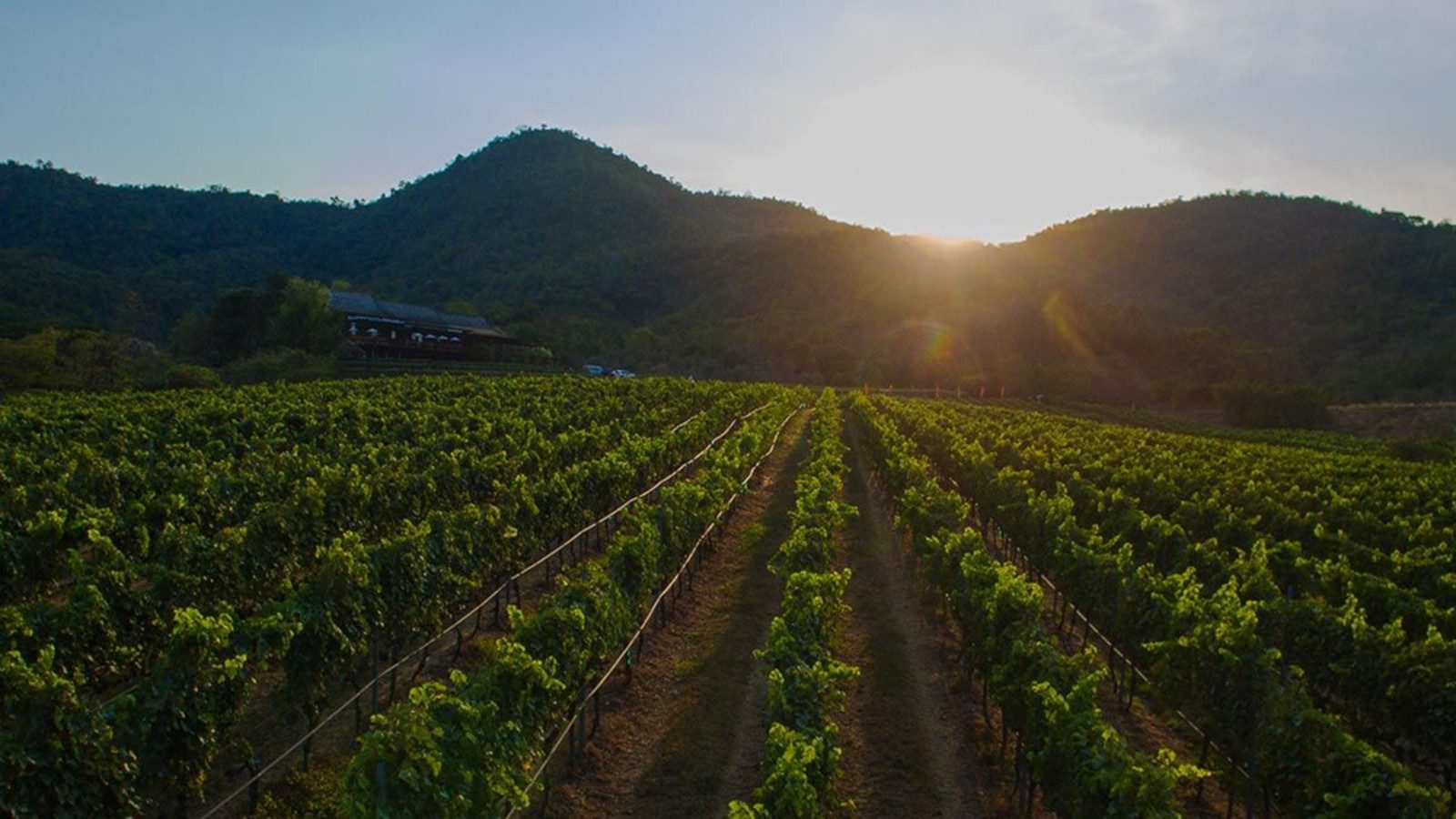
Thailand's Monsoon Valley, covered in more depth here, tackles a nearly identical monsoon problem with its own version of double pruning, forcing two harvests a year around the rains rather than around a winter that will never come. It's the same core trick as São Francisco Valley, arrived at independently on the other side of the world, because relentless heat and humidity create the same disease pressure everywhere they occur, regardless of which hemisphere or continent it happens on.
Why bother at all
None of this is easy, and none of it is cheap — double pruning, pergola training, and deliberately timed harvests all cost more in labour than letting a vine follow a normal single-season cycle somewhere temperate. What tropical viticulture proves is that "grapes need a proper winter" is a rule about typical conditions, not a hard limit on where wine can be made. Give a vine the dormancy it needs by force, on a schedule you control, and it turns out the equator was never actually the obstacle everyone assumed it was.