
What Actually Happens During Fermentation?
Yeast eats sugar, produces alcohol and carbon dioxide as waste, and stops when one of the two runs out. That's the entire mechanism underneath everything else.
Everything else this site has explained about wine — the buttery Chardonnay trick, noble rot, tannin, oak — happens either during or immediately after one single biological process that most people nod along to without actually picturing. Grape juice doesn't become wine through some vague transformation. Yeast eats the sugar in it, and wine is the leftover mess.
The mechanism, stripped down
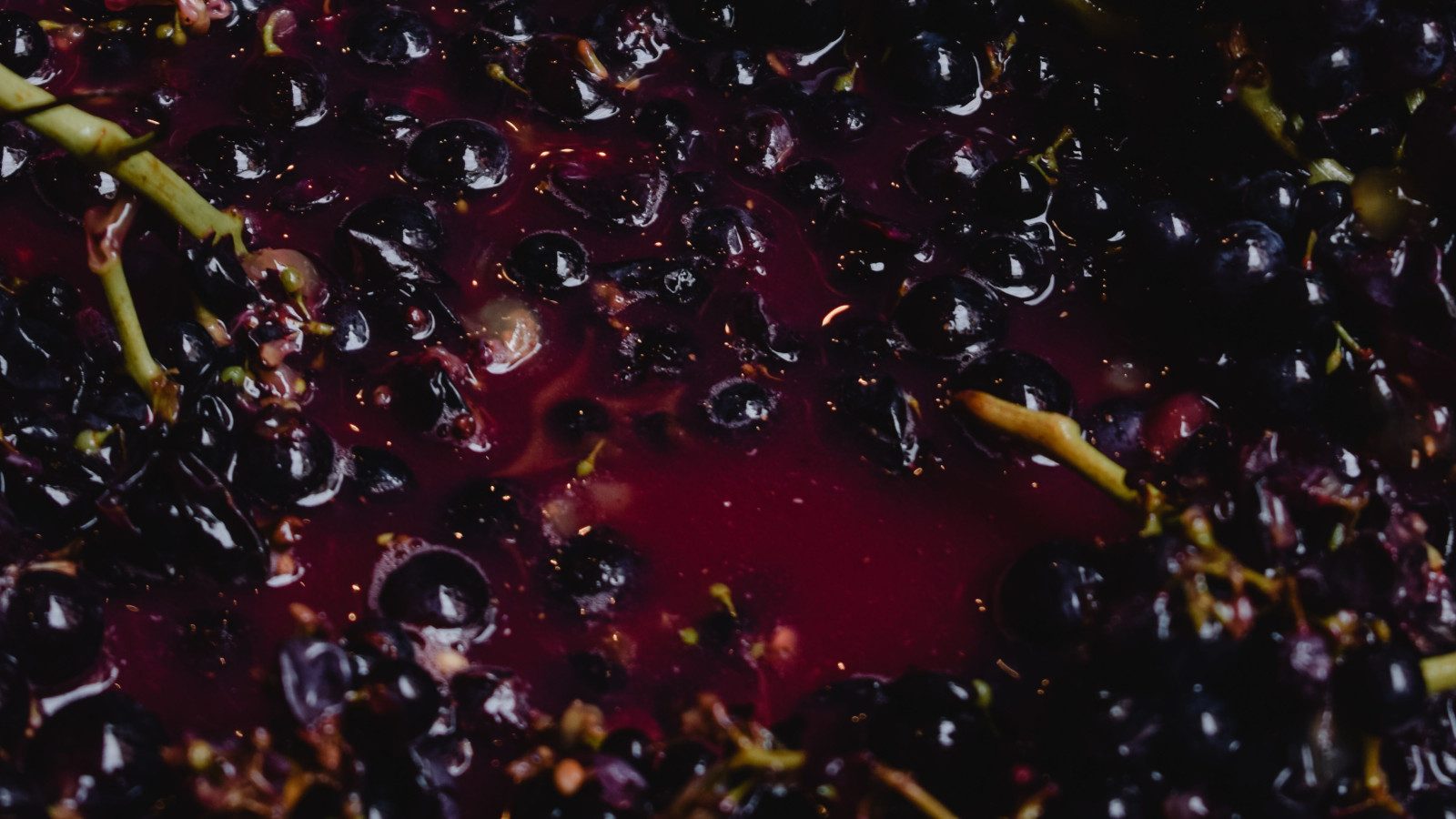
Yeast is a single-celled fungus that consumes sugar and, as waste products, produces ethanol and carbon dioxide. That's fermentation, in its entirety — no more mysterious than bread dough rising, which is the exact same organism doing the exact same job with a different end goal. Pour crushed grapes into a tank, and given time, temperature, and enough sugar, the juice's naturally sweet, low-alcohol state gets converted step by step into something drier and alcoholic, with the CO2 mostly bubbling off into the air.
It stops for one of two reasons: the yeast runs out of sugar to eat (a fully "dry" wine, with essentially none left), or the alcohol concentration climbs high enough to start killing the yeast itself, usually somewhere around 15–16% for most strains — which is roughly why you rarely see a still wine much stronger than that without deliberately adding spirit, the way fortified wines do.
Wild yeast versus a packet from a lab
Grape skins already carry wild, ambient yeast naturally, and some winemakers ferment with nothing else — a genuine stylistic choice, not just a natural-wine talking point. Wild fermentation is less predictable: it can produce more complex, distinctive character, or it can stall out entirely or throw off unwanted flavours, since you're relying on whatever happened to be living on that year's grapes. Cultured yeast, isolated and sold as a specific, reliable strain, trades some of that unpredictability for consistency — the same strain behaves roughly the same way every year, which matters enormously to a producer who needs this year's wine to taste like last year's.
Why temperature is a real lever, not a detail
Cooler fermentation, typical for whites, preserves the more delicate, fresh aromatic compounds that heat would otherwise drive off — which is part of why crisp whites keep their bright, zesty character. Warmer fermentation, typical for reds, extracts more colour and tannin from the skins sitting in the tank and tends to push flavour toward riper, darker fruit. Same basic mechanism, same yeast, same sugar — the temperature dial is doing a genuinely large share of the stylistic work before anyone's even mentioned oak.