
What Are Dessert Wines?
Noble rot, frozen grapes, added spirit — sweetness that survives fermentation always takes a deliberate trick to get there.
Half the table visibly recoils the moment a small glass of something syrupy-looking gets poured after dinner, as if sweet wine were a trick being played on them. It isn't a trick. It's a completely different category of wine, built by completely different methods, several of which sound more like an accident than a recipe.
The methods behind the sweetness
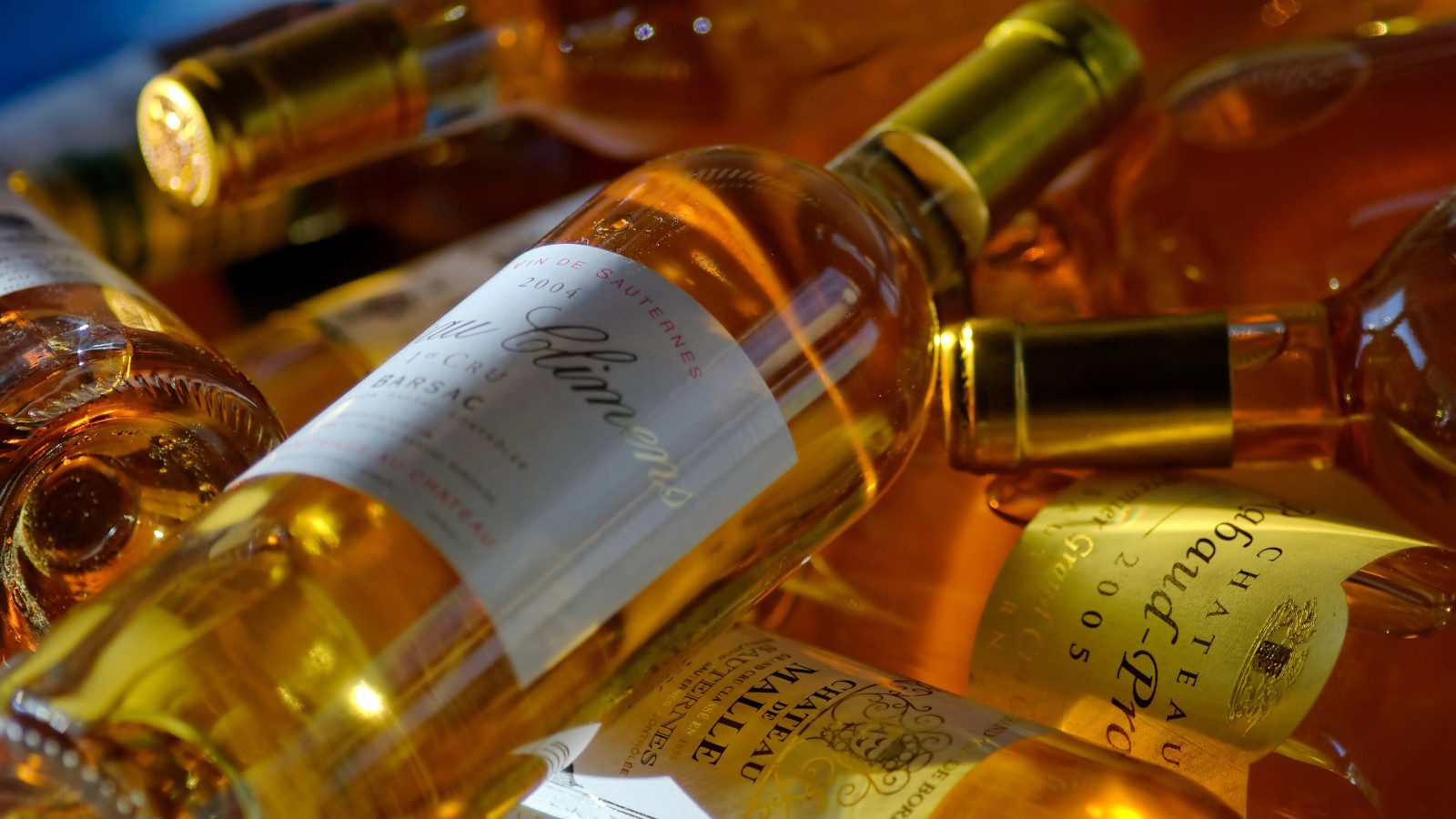
Sweetness in wine survives fermentation in one of a few deliberate ways. Noble rot wines — most famously Sauternes — rely on a fungus that shrivels the grape and concentrates its sugar into something closer to nectar than juice. Ice wine works almost mechanically: grapes are left on the vine until a hard frost freezes the water inside them, then pressed while still frozen, so only the concentrated, unfrozen sugary liquid comes out. Fortified wines, like Port, have a spirit added partway through fermentation, which kills the yeast before it can convert all the sugar to alcohol, leaving natural sweetness behind on purpose. Late-harvest wines are simpler still — just leaving grapes on the vine longer than usual so more sugar accumulates before picking.
Why they come in tiny bottles
Dessert wines are usually sold in 375ml half bottles rather than a standard 750ml, and it's not a marketing gimmick — a little goes a long way. They're far sweeter and often higher in alcohol per sip than table wine, so a full-size bottle would sit half-finished and oxidising for weeks. A half bottle matches how much of this stuff anyone's actually meant to drink in one sitting.
How to actually serve one
Chilled, in a small glass, and not necessarily just with dessert — a classic pairing is Sauternes with blue cheese, where the wine's sweetness directly balances the cheese's saltiness rather than competing with it. Serving it alongside a dessert that's sweeter than the wine is the one reliable way to ruin it: the wine needs to be at least as sweet as whatever's on the plate, or it'll taste thin and sour by comparison. Served on its own, slightly chilled, after a meal, is the simplest way to get it right every time.