
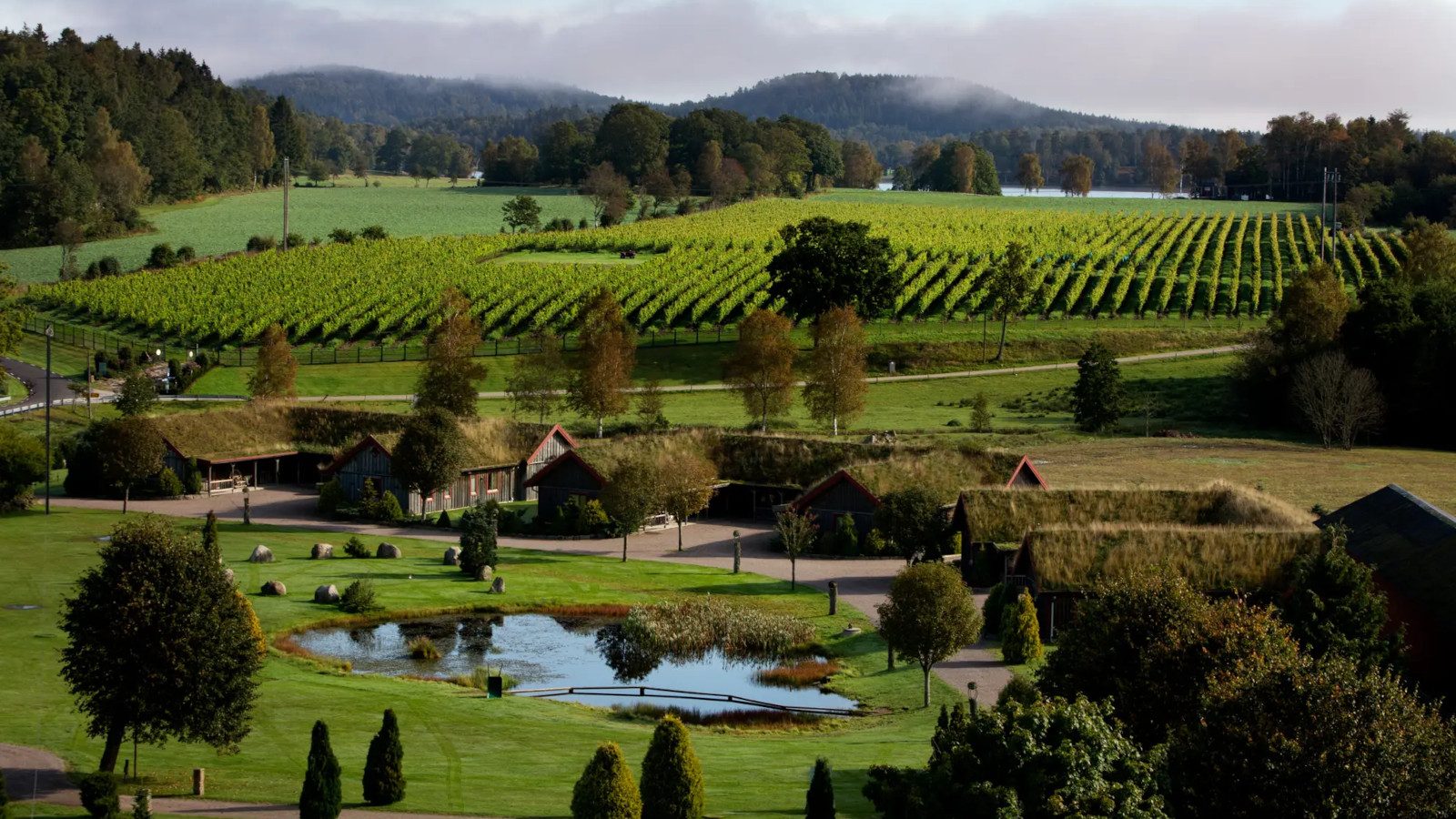
Wine From Scandinavia?
A warming climate, unusually long summer daylight, and a grape bred for exactly this problem — how Denmark, Sweden and Norway ended up making genuinely good wine.
Denmark got official EU recognition as a wine-producing country only in the year 2000. Sweden and Norway's commercial industries are younger still. None of that would be possible without two things arriving at once: a warming climate, and a grape bred specifically to make the most of what a cold country can actually offer.
The climate is doing real, measurable work
The same climate mechanism reshaping England's wine map is at work further north too — a warming climate has pushed the growing season in southern Scandinavia into a range where ripening grapes reliably, rather than occasionally by luck, has become possible for the first time. It's the same story told at a more extreme latitude: land that was simply too cold to bother with a couple of generations ago is now marginal-but-workable.
The daylight is doing work nobody expects
Here's the part that's easy to miss: Scandinavian summers are short, but the days inside them are extremely long, with far more daylight hours per day during the growing season than a vineyard at, say, Bordeaux's latitude ever gets. Grapevines photosynthesize on daylight, not on a calendar, so more hours of light per day partly compensates for a shorter overall season — slower, steadier ripening driven by unusually long days rather than by raw heat.
Grapes that were built for exactly this
None of it would matter without a grape able to actually ripen fully in that short window. Solaris, bred at Germany's Freiburg wine institute and released in 1975, has become Scandinavia's signature grape for exactly that reason: it ripens early enough to finish well before an early frost, and it carries real natural resistance to the fungal diseases (mildew, botrytis) that thrive in the damp, cool conditions common at these latitudes. It wasn't bred with Sweden or Norway specifically in mind, but its whole genetic design — early, hardy, disease-resistant — turned out to be exactly what a marginal cold-climate wine industry needed to become viable at all.
What actually ends up in the glass
The result leans hard into what a genuinely cool climate does best: high, lively acidity, a fresh, aromatic profile — typically gooseberry, elderflower, citrus — and a lightness that a warmer-climate white simply can't replicate, no matter how it's made. It's the most extreme, most legible version of the cool-climate wine story: take the climate mechanism to its actual limit, hand it the right grape, and you get wine that couldn't have existed there at all a few decades ago.