
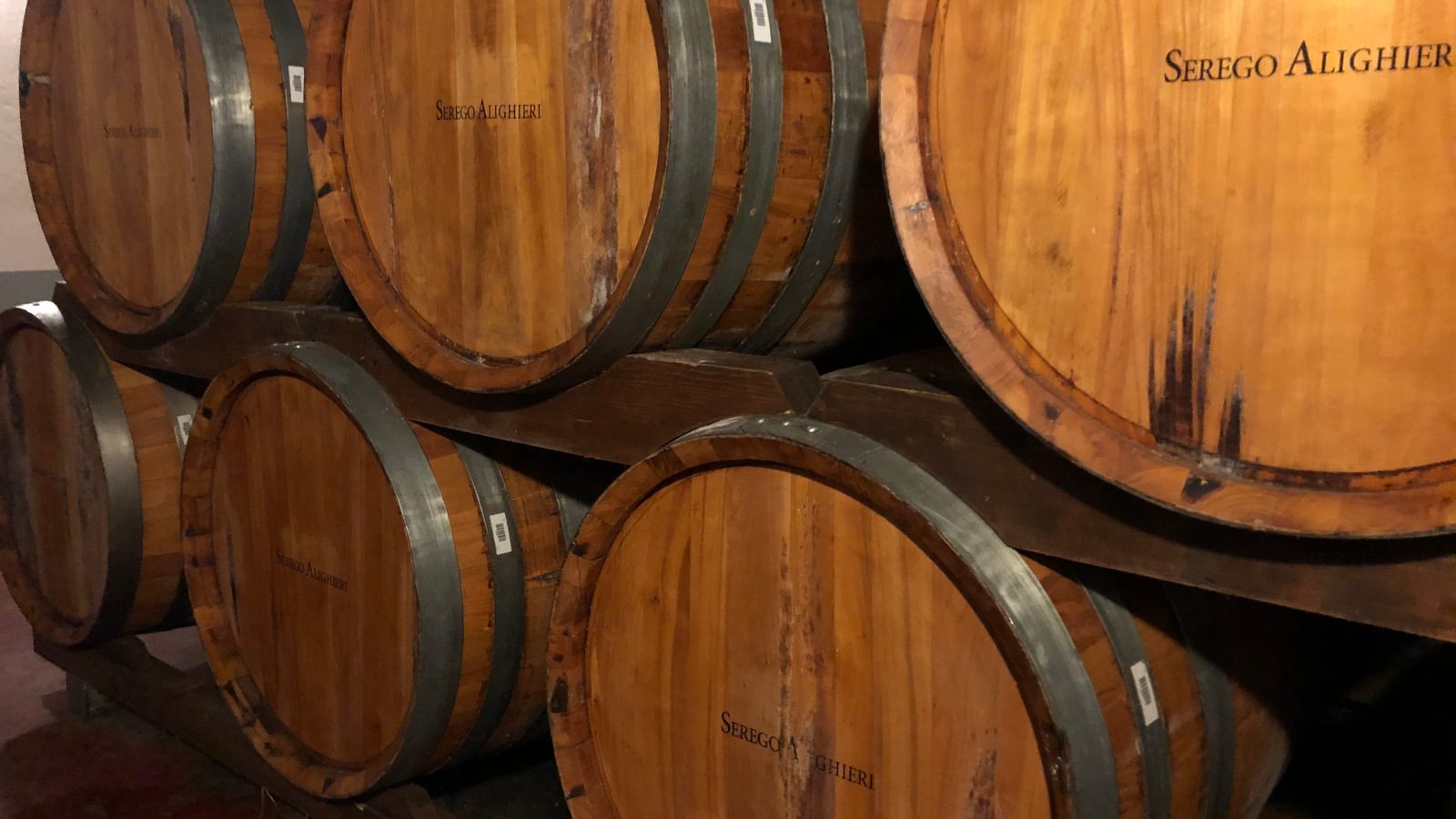
Amarone And The Art Of Drying Grapes On Purpose
Same goal as botrytis — shrivel the grape, concentrate the juice — reached with a drying rack instead of a fungus.
Botrytis gets grapes to the same destination Amarone reaches — a raisined, concentrated, sugar-dense berry — by letting a fungus quietly eat away at the water content over weeks on the vine. Amarone does it the other way round: no fungus, no vine, no waiting for the weather to cooperate. Just grapes picked at normal ripeness, then laid out and left to shrivel on purpose.
Drying grapes indoors, deliberately
The process is called appassimento. After harvest, bunches of Valpolicella's grapes — mostly Corvina, Rondinella, and a handful of local varieties — are spread out on bamboo racks or straw mats in ventilated lofts for anywhere from three to four months. Over that time they lose a serious percentage of their water weight, concentrating sugar, acid, and flavour compounds into a smaller volume of juice. It's essentially winemaking's version of reducing a sauce: same core ingredients, far less water, everything else turned up.
The result, once fermented, is Amarone della Valpolicella — a dense, high-alcohol red, typically 15% or more, with dried fruit and a bitter, savoury edge that gives the wine its name ("amarone" derives from "amaro," bitter). Where botrytis relies on damp weather and a specific fungus showing up at exactly the right moment, appassimento needs nothing but a dry loft and patience, which is part of why it's such a reliably repeatable technique from vintage to vintage.
The clever bit: reusing the leftovers
Winemakers in the region also do something neither Sauternes nor Tokaji bothers with: reusing what's left after the Amarone is pressed off. Young, everyday Valpolicella wine gets passed back over the leftover Amarone skins and lees — still carrying residual sugar and flavour — and left to ferment a second time on top of them. That "second pass," or Ripasso, picks up extra body, a touch more alcohol, and some of Amarone's dried-fruit character, at a fraction of the price and ageing time of the real thing. It's less a shortcut than a genuinely clever bit of not wasting anything.
Two ways to get the same water out
Botrytis and appassimento are solving an identical problem — too much water diluting flavour — from opposite directions: one invites in a living organism to do the work unpredictably, the other just controls humidity and airflow and waits it out. Neither is the "proper" method and the other a cheat; they're just two different answers to the same question, and Amarone happens to be the one where nobody has to hope for the right kind of rot to show up on schedule.